

Last updated October 30, 2026
 House lockouts
 Re-keying
 Deadbolt upgrades
 Smart locks
 Schlage
 Kwikset
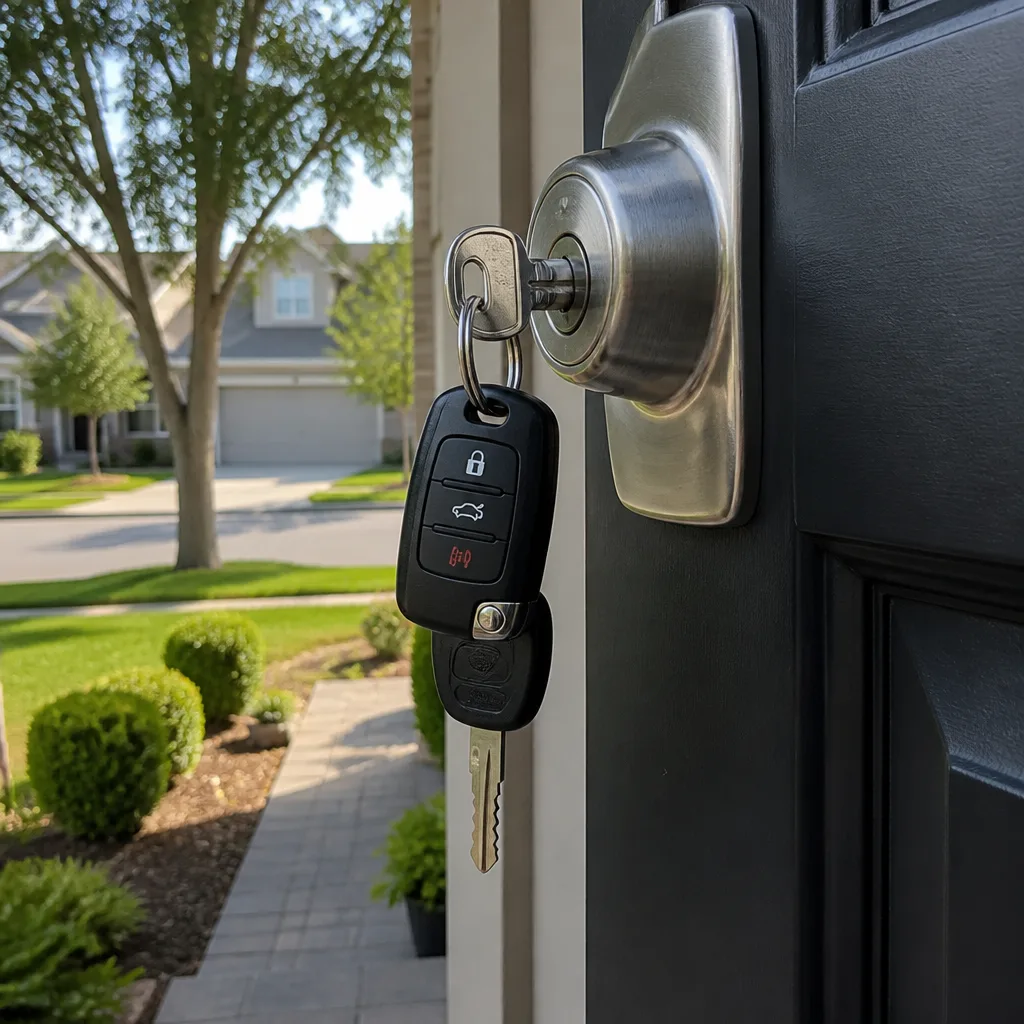 Car keys & fobs
Non-destructive entry first, always - and we re-key Schlage, Kwikset, and Baldwin locks on the spot while you watch
You get a price before we start. It does not change when we arrive. No surprises.
Get your free estimateCar Key Replacement Maintenance Checklist for Mesa Homeowners
A key fob left on a car dashboard during a Mesa summer can reach internal temperatures above 160°F. At that heat, the lithium coin cell battery inside degrades at roughly double its normal rate, and the micro-solder joints in the transponder chip expand and contract until hairline fractures form. Most Mesa drivers never think about this until the moment the key stops working in a Fry’s parking lot in July. This guide is a maintenance checklist built specifically for the Sonoran Desert climate: what to inspect before the heat arrives, what fails first, how to store a spare so it survives, and when replacing a key proactively saves hundreds of dollars over emergency replacement. For more guides & resources, see our blog.
Quick Answer
Car key replacement in Mesa AZ should be approached as a preventive maintenance task, not an emergency. The two things every Mesa homeowner should do are: inspect each key and fob every March and October, and get one spare programmed per vehicle before the keys you have show signs of failure. A spare key programmed proactively typically costs a fraction of what an emergency or dealership replacement costs, and locksmith programming usually gets done same-day without a tow.
Styles & brands we work with
Table of Contents
- Why Mesa Heat Destroys Car Keys Faster
- The March Pre-Summer Checklist
- The October Post-Summer Checklist
- Transponder Keys vs. Smart Keys vs. Proximity Fobs: Heat Vulnerability
- 7 Signs a Key Is Failing Before It Fails Completely
- Dealer Programming vs. Locksmith Programming
- Getting a Spare Key: Why Proactive Programming Is Cheaper
- How to Store a Spare Key in Mesa’s Heat
Why Mesa Heat Destroys Car Keys Faster
Ask anyone who has lived in Mesa for more than one summer and they’ll tell you the heat does strange things to cars. Batteries die early. Dashboards crack. Windshield wiper blades bake hard. Car keys are no different. What most people don’t realize is that a modern car key is not just a piece of cut metal. It contains a transponder chip, which is a tiny RFID circuit sealed inside the plastic head of the key. That chip does not have its own power source in a traditional transponder key. It gets energized by the ignition coil when you turn the key. In a smart key or proximity fob, there is also a small circuit board and a coin cell battery that powers active communication with the car.
Every one of those components has a temperature tolerance. Most coin cell batteries are rated for operation up to 140°F, and storage up to 158°F. A Mesa car interior in direct afternoon sun regularly exceeds those numbers. The battery does not fail immediately. What happens is the electrolyte inside the cell evaporates slowly through the seal. Each heat cycle loses a little capacity. After one Mesa summer, a fob battery may have lost 30 to 50 percent of its useful life even if it still locks and unlocks the doors. The transponder chip itself is solid-state and more durable, but the solder joints that attach it to the antenna coil are not. Repeated expansion and contraction from 40°F winter mornings to 160°F summer interiors is a textbook recipe for micro-cracks.
In our experience in Mesa, we see a reliable seasonal pattern. Key failures spike in late July, August, and early September, after two or three months of continuous heat have done their work. A key that worked fine in May starts giving intermittent no-start issues in August. The battery is not dead yet, but the voltage has sagged enough that the car’s antenna ring can no longer reliably read the chip. Drivers think it is an ignition problem or a car battery problem. Often it is the key.
The March Pre-Summer Checklist
March is the right time in Mesa to do a full key and fob inspection. The weather is still mild, which means you can work on your car without heat stroke, and it gives you time to order parts or schedule service before the summer rush. Here is a step-by-step checklist we recommend for every Mesa household with at least one vehicle.
- Test every key you own, including the ones you never use. The spare key sitting in a kitchen drawer may have a dead battery even if the daily key works fine. Press the lock, unlock, trunk, and panic buttons on every fob. If any button takes two presses to respond, the battery is weak.
- Check the physical key blade for wear. Even if your car has push-button start, there is usually a hidden metal blade inside the fob used for the driver’s door when the battery dies. Pull it out and check the cuts. Worn cuts are harder to duplicate later. This is the time to get a fresh blade cut.
- Replace all fob batteries at once. Coin cell batteries cost a few dollars. If one fob battery is at 50 percent, the others are too. Replace them all in March and you will not think about batteries again until October.
- Note which key starts the car and which doesn’t. Some households have a key that unlocks the doors but won’t start the engine because the transponder chip is no longer recognized. That key is a failure waiting to strand you. Tag it and get it repaired or replaced now.
- Schedule a spare key programming if you only have one working key. Many vehicles require two working keys to program a third yourself. Once you are down to one key, you cannot make a copy without a professional. March is the time to fix that.
- Inspect the ignition cylinder if your key feels loose or sticky. Heat and dust in Mesa accelerate wear on ignition cylinders. A key that has to be jiggled to turn in March will be worse in August, when the metal expands. Address it while the weather is cool.
This March checklist takes about 30 minutes. It costs almost nothing if your keys are healthy. If it turns up a problem, you caught it three months before the heat would have turned it into a stranded-in-a-parking-lot emergency. That is the whole point.
Why March Matters More in Mesa Than Anywhere Else
Other parts of the country do car key maintenance when the weather turns cold, because cold kills car batteries. Mesa has the opposite season. Our failure season is summer, and it starts earlier every year. By late May, daytime highs are already over 100°F. If you schedule key work in June, you are competing with everyone else whose keys died at the same time. March is the calm before that storm. Locksmiths in Mesa are less slammed in March, parts are more available, and you can deal with the problem on your schedule rather than from the side of Loop 202.
The October Post-Summer Checklist
October in Mesa means the heat has finally broken, snowbirds are arriving, and cars have just survived another brutal summer. It is the second maintenance window of the year. The October checklist is about recovery and preparation for the mild winter months.
- Replace fob batteries again if you skipped March. If your fob made it through summer, the battery inside is running on borrowed time. The heat has accelerated its degradation even if it still works. Replacing it in October costs a few dollars and eliminates a failure point for the next six months.
- Test your spare key that has been sitting in a hot garage or glovebox all summer. Heat does not care whether a key is used daily or sits idle. A spare fob stored in a Mesa garage in summer is exposed to 110°F ambient heat for months. Its battery may be dead even if you never pressed a button. Test it now, not when you’re locked out.
- Check for cracks in the fob housing. Plastics in car key fobs become brittle after repeated heat cycles. Look for hairline cracks around the key ring loop and the case seam. If the housing is cracked, moisture and dust get in, and the circuit board fails soon after. A cracked housing is a $10 fix now and a $200 key replacement later.
- Verify that the key blade still operates all locks. If you have a metal key, check it in the door, the trunk, and the glovebox. Sometimes the ignition works but the door cylinder has gotten sticky. A dry lock cylinder in Mesa is common, and a quick graphite or dry lubricant application prevents a broken key inside the lock.
- Inventory which keys you actually have. Count your keys. How many working keys does each vehicle have? If a household has three drivers and one working key, October is the time to get a second or third programmed. You do not want to realize this in June.
Transponder Keys vs. Smart Keys vs. Proximity Fobs: Heat Vulnerability
Not all car keys fail in the heat the same way. Knowing what type of key your vehicle uses tells you what to expect and how urgent proactive maintenance is. The three main categories are transponder chip keys, smart keys, and proximity fobs.
Transponder Chip Keys
These are traditional metal keys with a plastic head that contains a passive RFID chip. They are common in older vehicles, roughly 1998 to 2015, including many Hondas, Toyotas, Fords, and Chevrolets that are everywhere in Mesa. The chip has no battery. It receives power from the car’s ignition antenna when you insert and turn the key. This makes the transponder key the most heat-resistant of the three types, because there is no battery to cook and the chip itself is sealed. That said, the chip is not indestructible. The solder joints connecting the chip to the antenna inside the plastic head can crack over years of thermal cycling. A transponder key that works intermittently, where the car cranks but won’t start on the first try, is showing classic chip fatigue.
Smart Keys
Smart keys, sometimes called intelligent keys or push-button start keys, have both a transponder chip and an active circuit board with a battery. They transmit a signal to the car so you can start it with a button. They are common on newer Nissans, Toyotas, Kias, and Hyundais, which Mesa roads are full of. The battery is their weak point in heat, but the circuit board is also vulnerable. Smart keys that get left in a car in the summer often show swollen or leaking batteries that corrode the contacts on the circuit board. That corrosion turns a $3 battery replacement into a full key replacement.
Proximity Fobs
Proximity fobs, also called keyless entry fobs or remote fobs, are the type that unlock the car automatically when you approach, without pressing a button. They are the most heat-sensitive because they are constantly broadcasting or listening for the car’s signal. This continuous operation drains the battery even when parked, and heat accelerates the chemical depletion. Vehicles with proximity fobs in Mesa often need battery replacements twice a year: once in March and once in October. Pair that with the fact that some proximity fobs pair to the car with cryptographic handshakes that are harder to program than older transponder keys, and the cost of failure rises accordingly.
Which Vehicles in Mesa Are Most at Risk
The vehicles we see most often for key failure in Mesa are not exotic cars. They are the daily drivers that live outside in driveways and apartment parking lots without covered parking:
- Honda Accord and Civic (2013-2020) – smart key fob batteries fail faster than average in heat, and many owners are down to one working key.
- Toyota Camry and Corolla (2015-2021) – the proximity fobs are known to drain in hot climates, and the physical key blade wears quickly.
- Ford F-150 (2015-2022) – a huge share of Mesa vehicles, and the IKT (integrated keyhead transmitter) type combines a transponder with the remote, so when the chip fails, the whole key goes.
- Kia and Hyundai (2015-2022) – these vehicles frequently have only two keys from the factory, and one locksmith-programmed spare is cheap insurance compared to the dealer price of a third key.
- Nissan Altima and Rogue (2014-2020) – smart key circuit boards are prone to heat-related battery corrosion in Mesa’s climate.
If you drive one of these and park outdoors, the March and October checklists are not optional. They are the difference between a cheap battery swap and a tow to the dealer.
7 Signs a Key Is Failing Before It Fails Completely
Car keys rarely die without warning. They give signals for weeks or months before they stop working entirely. Learning to read those signals is the single most important maintenance skill for a Mesa driver. Here are the seven signs we tell homeowners to watch for.
- Reduced remote range. You used to unlock the car from across a parking lot, and now you have to be standing next to the door. This means the fob battery voltage is sagging. It is the earliest and most reliable warning sign.
- Intermittent start failures. The car cranks but doesn’t fire on the first try, or the push-button start says “No Key Detected” even though the fob is in your pocket. That is the transponder signal weakening. It will get worse.
- Buttons require multiple presses. The unlock button works only on the second or third press. The battery is failing, or the rubber membrane under the button is cracked from heat. Either way, the fob is heading toward full failure.
- Sluggish ignition response with a metal key. The key goes in, but you have to jiggle it or turn it slowly to get the ignition to engage. The issue may be in the ignition cylinder, but a worn key blade contributes to it. In Mesa’s dust, cylinder wear happens faster than in wetter climates.
- The key physically feels loose in the fob. If the metal blade wobbles where it attaches to the fob housing, the mechanical connection is failing. Heat makes plastic brittle, and a blade that snaps off inside the door lock or ignition creates a much bigger problem.
- Battery corrosion visible when you open the fob. If you open the fob to replace the battery and see white or green residue on the contacts, the battery has leaked. Clean it gently with isopropyl alcohol and a cotton swab, but understand that corrosion that has reached the board may shorten the fob’s life.
- You are down to one working key. This is not a sign of failure; it is a sign of vulnerability. If you have one key and it fails, you are paying for an emergency locksmith, a tow, or both. One working key is no working keys. Get a spare before you need it.
If you notice any of these signs, do not wait. The moment a key starts acting inconsistently is the cheapest moment to address it. After it fails completely, the math changes. You might be paying for a tow, an emergency service call, and key programming all in one afternoon, in the heat, on a time crunch.
Dealer Programming vs. Locksmith Programming
When a Mesa driver needs a new key or a spare key programmed, the default instinct is often the car dealership. That instinct usually comes from a belief that the dealer is the only place that can do it. That belief is outdated. Locksmiths have been programming transponder keys, smart keys, and proximity fobs for more than a decade, and in most cases, a qualified automotive locksmith in Mesa can do everything the dealer can do, faster and at a lower price.
Cost
Dealership key replacement prices vary widely by brand, but as a general pattern, you can expect the dealer to charge 50 to 100 percent more than a locksmith for the same key and programming. Some European brands and luxury models are even more. The key blank itself is often the same factory key. What you are paying for at the dealer is the overhead of a parts and service department, the appointment system, and the brand markup. A locksmith like Parkway Lock & Key home to Mesa carries or sources the same blanks and programs them on-site.
Wait Time
A dealership often requires an appointment days or sometimes weeks in advance for key programming. The car may need to be towed to the dealer if it will not start. In Mesa’s summer heat, arranging a tow and waiting for an open service slot is a miserable experience. A mobile locksmith comes to your driveway or workplace in Mesa, typically the same day you call. We carry the programming equipment in the van. No tow truck, no waiting room, no appointment three weeks out.
What’s Included
Dealer key replacement usually includes the key blank, cutting the blade if applicable, and programming the chip to the vehicle’s immobilizer. What it rarely includes is convenience. A locksmith’s key programming typically includes the same services plus verification that the key starts the vehicle, a test of all remote functions, and the ability to delete lost keys from the car’s memory so an old key can no longer start it. That last point matters. If you lost a key in a Mesa parking lot, getting a new key is not enough. The old key must be erased from the immobilizer’s memory. A locksmith does that in the same service call.
For homeowners who want to understand the full scope of automotive key replacement, our page on Car Key Replacement in Mesa covers the process end to end.
Getting a Spare Key: Why Proactive Programming Is Cheaper
The math on spare keys is simple and it is not close. Programming a spare key while you still have a working key costs a set amount, whether it is a transponder key, smart key, or proximity fob. Waiting until you have no working key often costs two to three times as much, once you factor in emergency call-out rates, the possibility of a tow, and the fact that some vehicles require more involved immobilizer work when no key is present.
Here is what proactive key replacement actually involves when you call a locksmith in Mesa with one working key:
- Verification of the existing key. We confirm the key type and that the working key starts the vehicle.
- Cutting the new blade. For transponder keys with a metal blade, we cut it to match the vehicle’s lock cylinders.
- Programming the new key to the immobilizer. This is the critical step. The car’s computer is put into learning mode, and the new key’s chip is registered.
- Deleting missing keys (optional). If you know a key is lost, we can remove it from the vehicle’s memory so it can no longer start the car.
- Full function test. We verify the new key starts the engine, unlocks the doors, and if applicable, that the remote buttons and proximity functions work.
That whole process, done proactively, takes less than an hour for most vehicles. Done reactively after the last key dies, you are potentially looking at a tow to a shop with the equipment, higher programming fees for an all-keys-lost situation, and the stress of being stranded.
One nuance many Mesa homeowners do not know: for some vehicles, if you have two working keys, you can program a third key yourself using the vehicle’s onboard procedure. The problem is that most households do not have two working keys. They have one. And once you have one, you cannot self-program. Every key after that requires professional equipment. So the window for cheap self-programming closes early. If you have two keys now, consider getting a third made before one gets lost. If you have one key now, get a second made this month.
How to Store a Spare Key in Mesa’s Heat
A spare key only helps if it works when you need it. The classic mistake in Mesa is to hide a spare transponder key in a magnetic box under the car chassis or in a lockbox outside the house. Heat does not care about good intentions. A magnetic box under a car in Mesa summer sits inches from asphalt that can reach 170°F. The key inside may not survive a single summer, and the battery in a smart key will be dead when you finally retrieve it.
Here is what we recommend for spare key storage in the Mesa climate:
- Store spare keys indoors, in climate control. A kitchen drawer or a closet shelf is fine. The key will outlive your ownership of the car. Do not store spares in the garage unless the garage is air conditioned or at least shaded and vented. A Mesa garage can hit 120°F in August.
- Avoid hiding spare keys on or under the vehicle. Under-chassis magnetic boxes are exposed to road heat, dust, and vibration. Every component in a transponder key has a vibration tolerance, and months of road vibration plus heat is a reliable key killer.
- If you need a spare accessible outside the home, use a shaded, ventilated lockbox. Choose a location that never sees direct sun. A covered carport column or a north-facing wall shaded by eaves works. Check the box interior temperature on a hot afternoon before committing a key to it.
- Remove batteries from spare fobs for long-term storage. If you have a spare smart key or proximity fob that you rarely use, take the coin cell battery out and store it separately in a cool place. This prevents slow discharge and heat-related leakage from corroding the fob’s circuit board while it sits.
- Rotate your spare keys. Every March and October, swap the daily key for the spare. Use the spare for a month, then switch back. This keeps both keys exercised and lets you catch a failing spare before you actually need it.
The best spare key strategy in Mesa is not just about where you store it. It is about testing it on a schedule. A spare that has not been tested in two years is not a spare. It is a hope.
Common Mistakes to Avoid
- Waiting until the key fails to get a spare. By the time you are stranded, you have lost every negotiating advantage and every cheap option. Emergency key replacement always costs more, and in a Mesa summer, it also costs your time and comfort.
- Storing the spare key on or under the car. Magnetic boxes bake in Mesa heat and fail. If the key is a transponder or smart key, a summer of under-car storage can destroy it without anyone ever touching it.
- Ignoring a fob that only works sometimes. Intermittent function is not a quirk. It is the electrical equivalent of a warning light. A fob that works only when it wants to is telling you the battery or circuit board is failing. Address it now, not after it leaves you locked out.
- Assuming only the dealer can program your key. This mistake costs Mesa drivers hundreds of dollars every year. Automotive locksmiths have the same programming equipment and often come to you. Emergency Locksmith in Mesa service from Parkway Lock & Key includes automotive lockouts and key programming at your location.
- Keeping a spare key on a hook near the front door in direct sun. A west-facing entry in Mesa gets brutal afternoon sun, and a fob hanging on a hook by the door is soaking in it. Move the hook to a shaded interior wall.
- Replacing the battery but ignoring the worn blade. The battery is the easiest fix, but a worn key blade will still bind in the ignition or snap inside a lock. If the blade is worn, replace the key shell or cut a new blade while the rest of the key is still functional.
- Believing a spare metal key is useless because you have push-button start. The metal blade inside a smart key exists for a reason: it opens the door when the fob battery dies and the car is locked. If that blade is missing, bent, or never cut, you have no manual entry. Test it.
When to Call a Professional
Some key issues are DIY-friendly: replacing a coin cell battery, cleaning battery contacts, testing a spare. But several situations genuinely require professional equipment and experience. Call a locksmith when you have only one working key and need a spare programmed, when a key has been lost and the immobilizer must be told to reject it, when a transponder chip intermittently fails and you cannot rely on the key, when a key blade is broken inside a lock or ignition, or when a smart key’s circuit board has been damaged by heat or battery corrosion. These are not jobs for pliers and patience. For Car Key Replacement Troubleshooting: Common Problems and How to Fix Them, see our detailed guide. Parkway Lock & Key offers free estimates in Mesa, and we bring the programming equipment to your location. Call (877) 824-1139 before you add a broken key to a hot afternoon.
Frequently Asked Questions
A transponder key replacement in Mesa typically costs less than a smart key, which costs less than a proximity fob. Exact pricing depends on your vehicle’s year, make, and model, and whether you still have a working key. The full price is quoted on the phone before anyone is dispatched to you, and it is the price on the invoice. There is no call-out surcharge added on arrival. Call (877) 824-1139 for an exact quote on your specific vehicle. Estimates are free.
In most cases, yes. A locksmith who handles Car Key Replacement in Mesa can come to your location, diagnose the key, replace a battery or cut and program a new key, and have you running the same day you call. The only exception is extremely rare or specialty vehicles that require a key that must be ordered.
Yes. The price you are quoted on the phone is the price on the invoice. There is no bait pricing, no arrival fee surprise, and no additional programming charge after the fact. The only thing that would change a quote is if the vehicle turns out to be a different key type than described on the phone.
Yes. Locksmith programming works on the same vehicles that dealers program. The equipment used by automotive locksmiths communicates directly with the vehicle’s immobilizer system and can add new keys, delete old ones, and program both transponder chips and remote functions. Your car does not need to go back to the dealer.
Sometimes. If the fob battery is dead or the transponder signal is weak, a new key will fix the problem. If the issue is in the vehicle’s antenna ring, receiver module, or body control unit, a new key will not resolve it. A professional diagnosis that separates key failure from vehicle failure is essential before paying for a new key.
Ask which key types and brands they program. A qualified automotive locksmith will answer with specific vehicle makes, key types, and programming systems. For help Choosing the Right Locksmith Brand: A Buyer’s Guide for Mesa, see our blog. Parkway Lock & Key works across eight major lock brands spanning residential, automotive, commercial, and high-security applications, and our automotive key programming covers most vehicles on Mesa roads. Call (877) 824-1139 with your year, make, and model, and we will tell you exactly what is involved.
The Bottom Line
Car key replacement in Mesa AZ is a maintenance issue, not a random failure. The heat degrades fob batteries, cracks transponder chip solder joints, and turns a one-key household into a stranded-motorist story. March and October are the two windows to inspect every key, replace batteries, test spares, and get that second or third key programmed before you need it. A proactive spare costs a fraction of an emergency replacement, and a locksmith does it same-day without dealership pricing or wait times. If you are down to one working key, or a fob is showing any of the failure signs in this guide, do not wait. Call Parkway Lock & Key at (877) 824-1139 and get the key situation handled before Mesa’s heat does it for you. We also offer Rekey Locks in Mesa when you need the same preventive attention on your home’s door hardware.
Written by the team at Parkway Lock & Key, serving Mesa since 2014.