

Last updated October 30, 2026
 House lockouts
 Re-keying
 Deadbolt upgrades
 Smart locks
 Schlage
 Kwikset
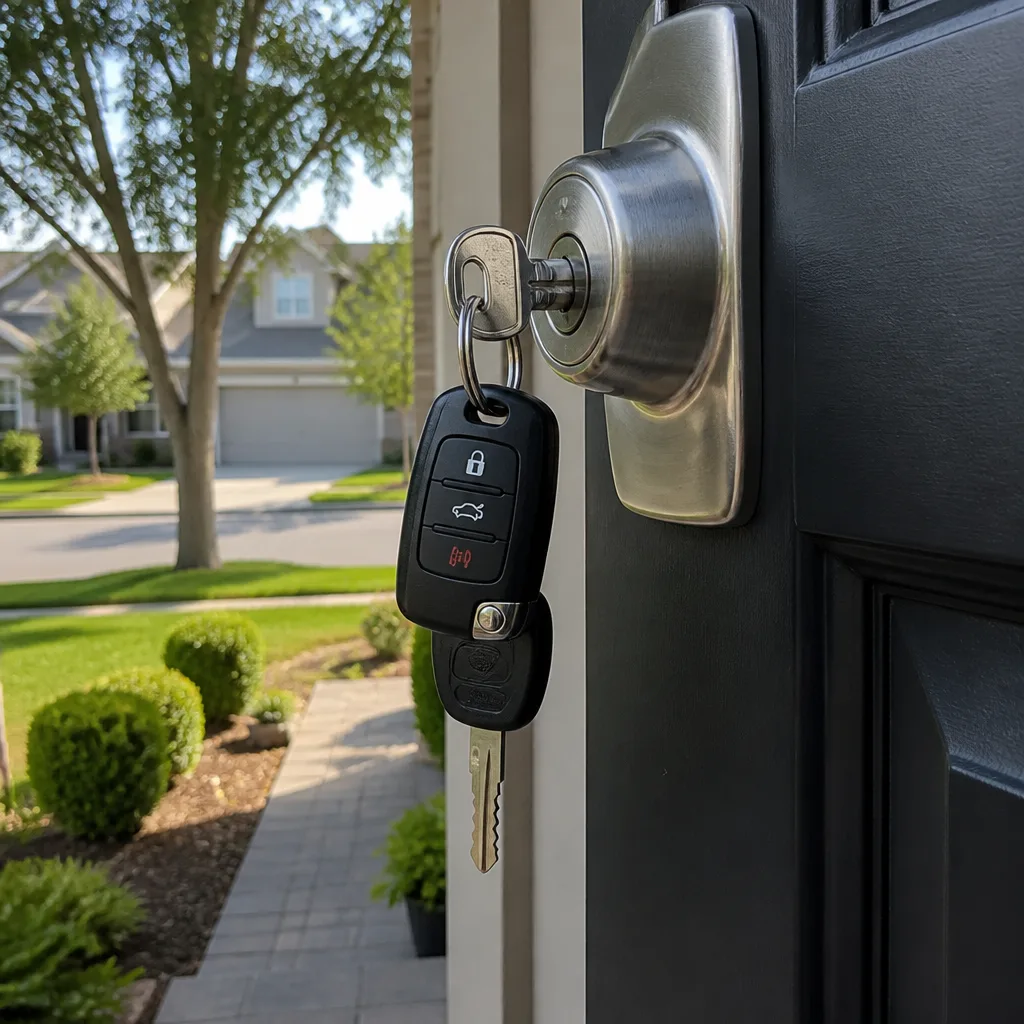 Car keys & fobs
Non-destructive entry first, always - and we re-key Schlage, Kwikset, and Baldwin locks on the spot while you watch
You get a price before we start. It does not change when we arrive. No surprises.
Get your free estimateCar Key Replacement Troubleshooting: Common Problems and How to Fix Them
Here’s a fact most people don’t learn until it happens to them: a surprising number of replacement car keys stop working within 48 hours of being made. Not because the locksmith did sloppy work, but because of one overlooked step nobody thought to verify. In Mesa, where triple-digit heat cooks electronics inside parked cars for months at a time, that window can be even shorter. This guide, alongside our Complete Car Key Replacement Guide for Mesa Homeowners, walks you through every common failure point in the car key replacement process, from the moment the key is cut to the day it stops turning in the ignition, so you can diagnose the problem accurately and avoid paying for the same key twice. We’ll cover cut issues, programming failures, battery problems, immobilizer lockouts, and the specific questions that create accountability before a repair truck ever pulls away.
Quick Answer
Most newly replaced car keys fail for one of three reasons: the key was cut correctly but never fully programmed to the vehicle’s immobilizer, the key blank itself is the wrong type for your car’s year and trim, or repeated failed attempts tripped the anti-theft system into lockout mode. The fix depends on which of these happened, and the way to tell is straightforward: if the key turns in the ignition but the engine won’t start, it’s a programming issue; if the key won’t turn at all, it’s a mechanical cut problem; if the key worked briefly and then stopped, you’re likely dealing with an immobilizer lockout or a fob battery that was never fully seated.
Styles & brands we work with
Table of Contents
- Cut Correctly vs. Programmed Correctly: Two Different Issues
- The Incomplete Programming Cycle: Why a “Finished” Key Isn’t Finished
- Anti-Theft Lockout: When Your Car Thinks You’re Stealing It
- The Wrong Key Blank: A Silent Saboteur
- Intermittent Fob Failure: Heat, Batteries, and Signal Issues in Mesa
- The Lockout Loop: How Too Many Bad Attempts Make Everything Worse
- Questions to Ask Before You Pay for a Replacement
- Common Mistakes to Avoid
- When to Call a Professional
- Frequently Asked Questions
Cut Correctly vs. Programmed Correctly: Two Different Issues
Here’s the thing most troubleshooting guides skip: a car key has two independent jobs, and they fail independently. The cut of the key is mechanical. It has to match the wafers or pins inside your ignition cylinder precisely enough to turn. The programming of the key is electronic. It has to synchronize with the immobilizer chip in your vehicle so the engine computer recognizes the key as authorized. One can be perfect while the other is completely wrong.
You can diagnose which one failed in under ten seconds. Insert the key and turn it gently. If the key turns the ignition cylinder to the “on” position and your dashboard lights come on, the cut is fine. The lock cylinder accepted the mechanical profile. If the key won’t turn at all, or turns only with significant resistance and wiggling, the cut is the problem. That’s a blank that was never machined correctly to your vehicle’s specifications.
Now, with the key in the “on” position, watch the dashboard. If you see a security light, a key-shaped icon, or an immobilizer warning that stays solid or blinks rapidly, the programming failed. The engine computer doesn’t recognize the chip inside the key. In our experience across Mesa, this is the single most common cause of a “replacement that didn’t work,” and it’s fixable without replacing the key again. The key blank may be perfectly good. The programming step just needs to be redone correctly, with the right equipment, in the right sequence.
The distinction matters because it changes who pays. If the key was cut wrong, that’s a blank and time problem. If the programming failed, it’s often a process problem. Knowing which one you’re dealing with before you call back makes the conversation shorter and the outcome better.
The Incomplete Programming Cycle: Why a “Finished” Key Isn’t Finished
Programming a car key is not a single action. It’s a sequence, and for many vehicles the sequence has to be completed in one continuous session. Stop early, skip a step, or cycle the ignition one time too many, and the key ends up in a half-programmed state. The chip is partially registered. The car may recognize the key on the next start attempt, or it may not. That unpredictability is the signature of an incomplete programming cycle.
Here’s what a full programming sequence typically looks like for a chipped key:
- Immobilizer entry: The programmer accesses the vehicle’s immobilizer module through the OBD-II port. Some older vehicles require an on-board sequence using the ignition, door locks, and a specific number of key turns.
- Key registration: Each key, including existing working keys and the new one, is registered to the vehicle in a specific order. On many Ford, Honda, and Toyota models, all keys must be present and programmed in the same session, or previously registered keys get wiped.
- Security handshake: The vehicle and the key exchange a rolling code. On some models this requires the key to be in the ignition, on others it requires the fob to be inside the vehicle at a specific location, like the console or the dash pocket.
- Confirmation cycle: The technician cycles the ignition off and on a specific number of times to confirm the registration took. Skipping this step leaves the key in a state that works exactly once.
- Test start: The key is tested in the ignition, then tested again after a five-minute wait to verify the registration persisted.
When a lockout tech is rushed, step four is what gets skipped. The key works in the moment. The customer drives away satisfied. The next morning, nothing. The registration didn’t persist because the confirmation cycle was never completed. In Mesa’s climate, there’s an added wrinkle: extreme heat inside a closed vehicle can cause intermittent failures in older immobilizer modules, which makes a barely-successful programming even more likely to fail on the next cold start at dawn.
The takeaway: a replacement key that works once and then stops is usually not a bad key. It’s a bad programming session. Ask to have the key reprogrammed in a full sequence, all keys present, with the confirmation cycle completed and tested twice.
Anti-Theft Lockout: When Your Car Thinks You’re Stealing It
Every modern vehicle has an immobilizer system designed to prevent exactly what a key replacement looks like from the outside: someone with an unrecognized key trying to start the engine. The system’s logic is simple. A certain number of failed start attempts in a row triggers a temporary lockout. The immobilizer refuses to accept any key, including your original working key, for a set period of time. On some vehicles that’s ten minutes. On others it’s thirty. On a few European models it’s an hour or more.
The problem compounds quickly. A customer gets a new key, tries it, gets denied, tries again, gets denied again, and before long they’ve tripped the lockout. Then they try their original key, which also gets denied because the system is now in lockout mode. They assume everything is broken. What actually happened is that the car’s security system did its job, and now everyone has to wait.
Signs you’re in an immobilizer lockout:
- Both your new key and your old working key suddenly fail to start the engine, even though they both turn in the ignition.
- The dashboard security light stays solid or blinks in a pattern you’ve never seen before.
- The engine cranks but doesn’t catch, or on push-start vehicles, the starter engages but the fuel system doesn’t fire.
- Waiting ten to thirty minutes and trying again works, which confirms the lockout was temporary, not a failed key.
The fix for a temporary lockout is time and patience. Do not keep trying keys during the lockout window. Every additional attempt can reset the timer on some vehicles. If the lockout doesn’t clear after the expected window, or if the vehicle requires a scan tool to reset the immobilizer, you’ll need professional help. Some vehicles, especially late-model European imports, require a dealer-level or equivalent diagnostic tool to clear a hard lockout. That’s not a failure of the key replacement. It’s a consequence of the vehicle’s security architecture.
The Wrong Key Blank: A Silent Saboteur
Key blanks are not universal. A 2015 Honda Civic uses a different blank than a 2016 Honda Civic. A Toyota Camry with a push-button start uses a different chip protocol than a Camry with a traditional ignition. Some blanks look nearly identical to the naked eye but differ in the depth of a single groove or the frequency of the embedded transponder.
When the wrong blank is selected, the key is often cut to perfection. The mechanical profile matches. It turns the ignition. It opens the door. But the chip inside the blank broadcasts on the wrong frequency, or doesn’t broadcast at all, and the vehicle never sees a valid key. The result is a key that behaves exactly like a programming failure, except reprogramming won’t fix it because the hardware itself is wrong from the start.
How to tell if your blank is wrong:
- The key turns the ignition smoothly but the security light never goes out, even after a full programming session.
- The key operates the door locks but not the ignition, or vice versa, depending on which chip the vehicle expects.
- A professional with the right diagnostic tool reports that the transponder in the key isn’t the correct type or frequency for your VIN.
This is where experience matters. A locksmith who works with a broad range of key types daily will recognize the mismatch faster and replace the blank rather than re-attempting a doomed programming sequence. That’s the difference between one service call and three. When you call a Car Key Replacement in Mesa specialist, ask upfront whether they verify the blank against your VIN before cutting. The answer tells you a lot about how the job will go.
Intermittent Fob Failure: Heat, Batteries, and Signal Issues in Mesa
An intermittent fob is the most frustrating kind of key problem because it never fails at a convenient time or in a consistent way. You unlock the car, drive across town, and the fob won’t lock the doors when you arrive. The next morning it works again. You assume it’s dying, but that’s often not the full story.
In Mesa specifically, we see three patterns that don’t show up in cooler climates:
- Heat-degraded batteries: Button-cell batteries inside key fobs are rated for a temperature range that Mesa summer interiors regularly exceed. A car parked in the sun at 115 degrees outside can reach 140 to 160 degrees inside. That accelerates chemical degradation in the battery. The fob’s range shrinks. It works when you’re standing next to the door but not from twenty feet away. Replacing the battery with a fresh, high-quality cell from a brand like Panasonic or Sony fixes this in about ninety percent of cases.
- Fob circuit board solder joints: Repeated heat cycling stresses the tiny solder connections inside the fob. The chip loses contact intermittently. The failure looks random because it depends on temperature, pressure on the case, and humidity. A technician with a magnifier can often spot the cracked joint, and it may be repairable without replacing the whole fob.
- Vehicle receiver module degradation: The receiver inside the car, usually in the center console or behind the dash, is also subject to heat stress. If two different fobs both show weak or intermittent range, the fob isn’t the problem. The vehicle’s receiver is. That’s a diagnostic that requires specialized equipment to confirm.
Before you replace a fob that’s acting flaky, try the cheapest fixes first: replace the battery with a fresh name-brand cell, clean the contacts inside the fob with isopropyl alcohol, and test the fob in several locations around the car. Note whether distance matters. A fob that works at close range but not from a distance is pointing toward the battery or the fob’s antenna, not the vehicle. A fob that works nowhere, regardless of distance, points toward programming or the vehicle’s receiver.
If you’ve gone through two batteries in under six months, the fob itself likely has a parasitic drain or a failing component. At that point, replacement is the honest answer, and it’s worth comparing the cost of a new fob programmed by a professional against the accumulating cost of batteries and frustration.
The Lockout Loop: How Too Many Bad Attempts Make Everything Worse
The lockout loop is the interaction between two systems that were never designed to cooperate: your car’s immobilizer and your own patience. Here’s the sequence, step by step, because understanding the mechanics is what stops it.
- You get a replacement key. It doesn’t work on the first try. That’s one failed attempt logged by the immobilizer.
- You try again, maybe jiggling the key or cycling the ignition. That’s two, three, four failed attempts.
- The immobilizer, now convinced a theft is in progress, enters lockout mode. It refuses all keys for ten to thirty minutes.
- You don’t know about the lockout. You keep trying. Every attempt during the lockout window either resets the timer or logs another failed attempt, depending on the vehicle.
- Your original key, which was perfectly fine, now also fails because the system is in lockout.
- You conclude that both keys are dead, call for a tow, and pay for a service you may not have needed.
The way out is counterintuitive: stop trying keys. The moment a key fails twice in a row, stop and wait. Most lockouts clear on their own. Thirty minutes of patience is cheaper than a service call, and it’s cheaper than a tow from anywhere in Mesa, which may run more than the key replacement itself.
There’s one exception worth knowing. A hard lockout, as opposed to a temporary one, requires a diagnostic tool to reset. Hard lockouts happen when the immobilizer logs too many failed attempts across too many sessions, or when a specific security threshold is crossed, like a key blade that’s cut close but not exactly and the system interprets it as a foreign key. Hard lockouts don’t clear with time. You’ll need a locksmith with the right programming equipment or, in some cases, a dealer-level reset. That’s not an upsell. It’s the vehicle’s security system working as designed, and it’s the correct diagnosis.
Questions to Ask Before You Pay for a Replacement
Accountability happens before the work, not after. The best way to avoid the finger-pointing that follows a failed replacement is to ask specific questions while the technician is still on site or on the phone. Here’s what we tell customers to ask, and what a solid answer sounds like.
- “Did you verify the key blank and transponder type against my VIN?” The answer should be yes, and the technician should be able to tell you what frequency your car expects. If the answer is vague, you’re working with the wrong person.
- “Does your programming process require all my existing keys to be present?” For many vehicles, yes. If the tech says it doesn’t matter, ask them to explain why your specific vehicle is exempt. On most Toyotas, Hondas, and Fords, it absolutely matters.
- “Can you test the key twice, once now and once after a five-minute wait?” This catches the incomplete programming problem before you’ve driven away. A tech who refuses a second test is a red flag.
- “What happens if this key stops working within the next week?” You want a specific answer: a re-programming, a replacement blank, or a re-cut, at no additional labor charge. Get it in writing on the invoice.
- “Is my vehicle one that requires all keys to be programmed in one session?” If the answer is yes and you only brought one key, postpone the job until you have all keys in hand. Otherwise you’ll be doing this again.
These questions take sixty seconds to ask. They save hours of frustration and, in many cases, a second service fee. A professional will answer them without hesitation. Someone who’s cutting corners will deflect, and the deflection is the information you needed.
Common Mistakes to Avoid
- Repeatedly trying a failed key until the immobilizer locks you out. Two failed attempts is the signal to stop. Every additional attempt risks a lockout that takes longer to clear and may require a service call.
- Assuming the key is the problem when the fob battery is just dead. A fob with a dead battery can’t be programmed, can’t lock or unlock doors, and can’t start a push-button vehicle. Before you schedule a replacement, spend five dollars on a fresh name-brand battery and check the polarity.
- Not bringing all existing keys to the programming appointment. On many vehicles, programming a new key wipes the old ones from the system. If those keys aren’t present to be reprogrammed, they stop working. Now you have one working key instead of three, and a second appointment to fix what could have been done in one visit.
- Buying a cheap replacement blank online and expecting a locksmith to make it work. Online key blanks are often the wrong chip frequency or a cheaply machined profile that will never cut cleanly. The money saved on the blank usually gets spent on extra labor trying to make it work, and it often still doesn’t.
- Ignoring the security light on the dashboard. That light is diagnostic information. Solid means one thing. Blinking means another. Pay attention to the pattern before you call for help, because it tells the technician exactly where to look.
- Calling a tow truck before checking whether the key turns the ignition. If the key turns and the dashboard lights up, the car’s mechanical systems are accepting your key. The problem is electronic, and a mobile locksmith can fix it in the parking lot without a tow. That’s the difference between a hundred-dollar house call and a three-hundred-dollar tow plus service.
- Assuming dealerships are the only place to get a replacement programmed. That used to be true. It hasn’t been true for over a decade. Independent locksmiths with the right equipment program the same keys faster and usually for less, and they come to you in Mesa instead of asking you to tow your car across town.
When to Call a Professional
Some problems are diagnosable at home. Some are not. If you’ve confirmed the battery is fresh, the key turns the ignition, and you’ve waited out any temporary lockout, yet the car still won’t start or the fob won’t respond, stop troubleshooting. The remaining possibilities require equipment most people don’t own: a transponder reader, a vehicle-specific programming tool, or access to wiring diagrams that show where the receiver module lives and how to test it. If your key worked once and then stopped, if your original key stopped working at the same time as the new one, or if the security light is doing something you’ve never seen before, those are professional-grade problems. Parkway Lock & Key offers free estimates in Mesa, and the technicians can diagnose most failures on site. Call (877) 824-1139 before you spend more time and money on guesses.
Frequently Asked Questions
Insert the key and turn it. If the key turns the ignition and the dashboard lights up, the cut is correct and the problem is electronic, meaning programming or a transponder issue. If the key won’t turn at all, or turns with heavy resistance, the mechanical cut is wrong and the key blank needs to be re-cut or replaced.
A key that works once and then fails is almost always the result of an incomplete programming cycle. The key was registered to the vehicle but the confirmation step wasn’t completed, so the registration didn’t persist. The fix is a full reprogramming session with all keys present, not a new key.
Yes. Most vehicles made after 2000 have an immobilizer that enters a temporary lockout mode after a specific number of failed start attempts. During the lockout, no key works, including your original. Waiting ten to thirty minutes usually clears it. A hard lockout, which happens after repeated attempts across multiple sessions, requires a professional diagnostic tool to reset.
Yes. Car interiors in Mesa routinely exceed 140 degrees in summer, which accelerates the chemical degradation of button-cell batteries inside key fobs. This shortens battery life and reduces signal range. If your fob works only at close range, a fresh high-quality battery is the first fix to try.
A qualified automotive locksmith offering Car Key Replacement services can program most car keys, including transponder keys and push-to-start fobs, using the same class of equipment dealerships use. Independent locksmiths are often faster and come to you, which matters when the car won’t start. Ask upfront whether the locksmith has experience with your vehicle’s make and model year.
Ask whether they verified the key blank and transponder against your VIN, whether your vehicle requires all keys to be programmed in one session, whether they’ll test the key twice with a wait between tests, and what their rework policy is if the key fails within the first week. A clear answer to all four questions is the sign of a professional.
Car key replacement in Mesa typically ranges from $150 to $450 for most standard transponder keys, with push-to-start fobs running higher depending on the vehicle’s make and year. The exact price depends on the key blank, the programming procedure your car requires, and whether you need additional keys programmed at the same time. Call (877) 824-1139 for a free estimate before anyone is dispatched, and confirm that the price quoted on the phone is the price on your invoice.
The Bottom Line
A car key replacement that doesn’t work is usually a fixable problem, not a lost cause. The key is cut right but programmed wrong, or programmed right but on the wrong blank, or perfectly fine and stuck behind an immobilizer lockout triggered by impatience. The difference between a bad key and a bad process matters, because one costs you a replacement and the other costs you a redo. Ask the right questions before you pay. Stop trying keys after two failures. Check the battery before you schedule a service. And when the problem is beyond what patience can fix, call a professional who can diagnose it on the spot instead of guessing from across town. For more guides & resources on keeping your keys working, visit our blog.
Written by the team at Parkway Lock & Key home, serving Mesa since 2014.
For Emergency Locksmith in Mesa service or to schedule a Rekey Locks in Mesa appointment, call (877) 824-1139.