
Last updated October 30, 2026
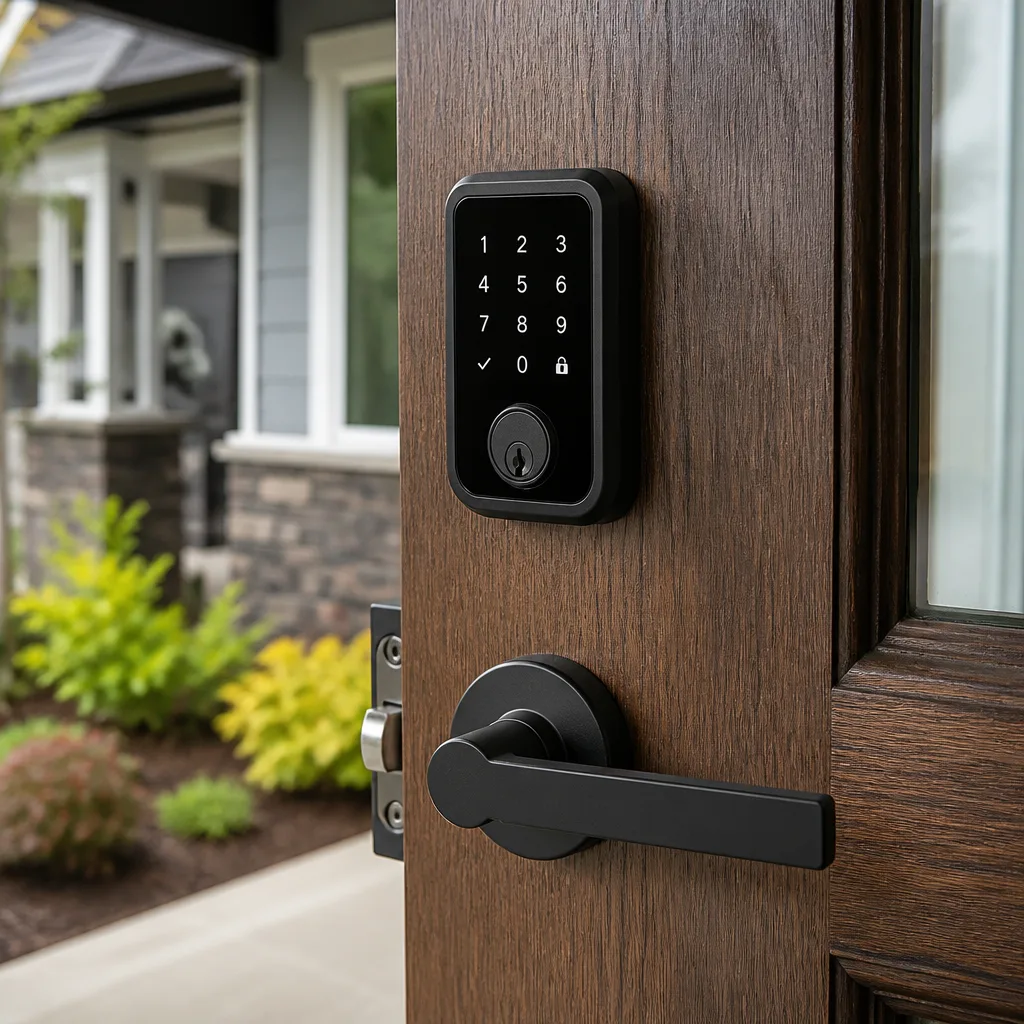 Smart locks
 House lockouts
 Re-keying
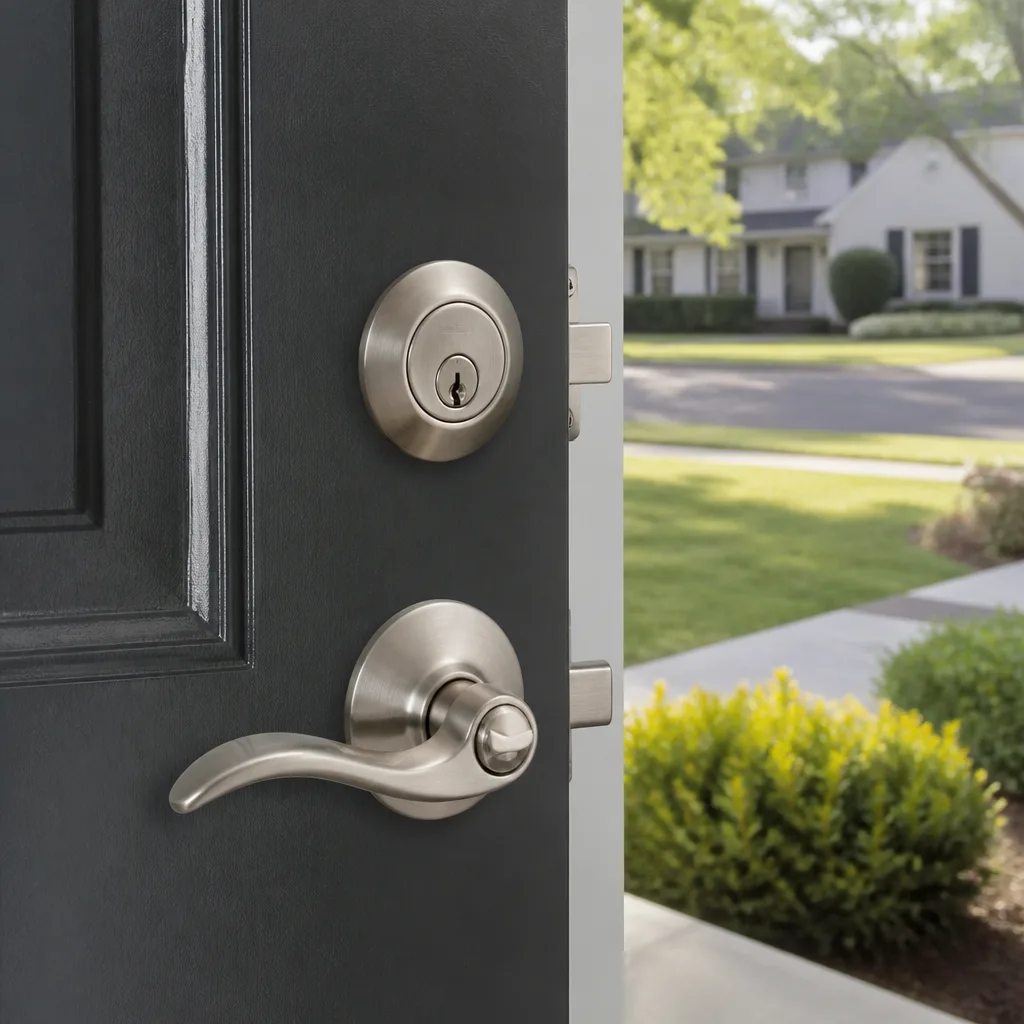 Deadbolt upgrades
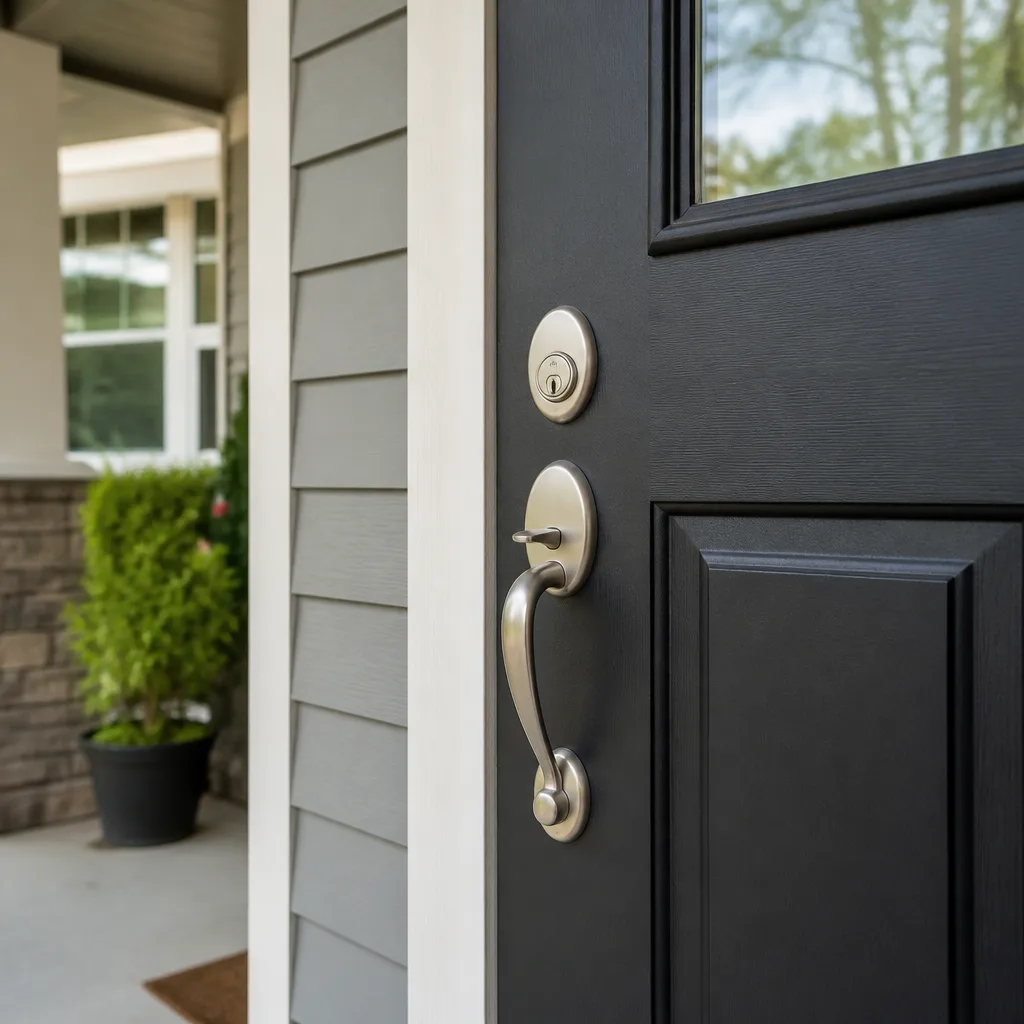
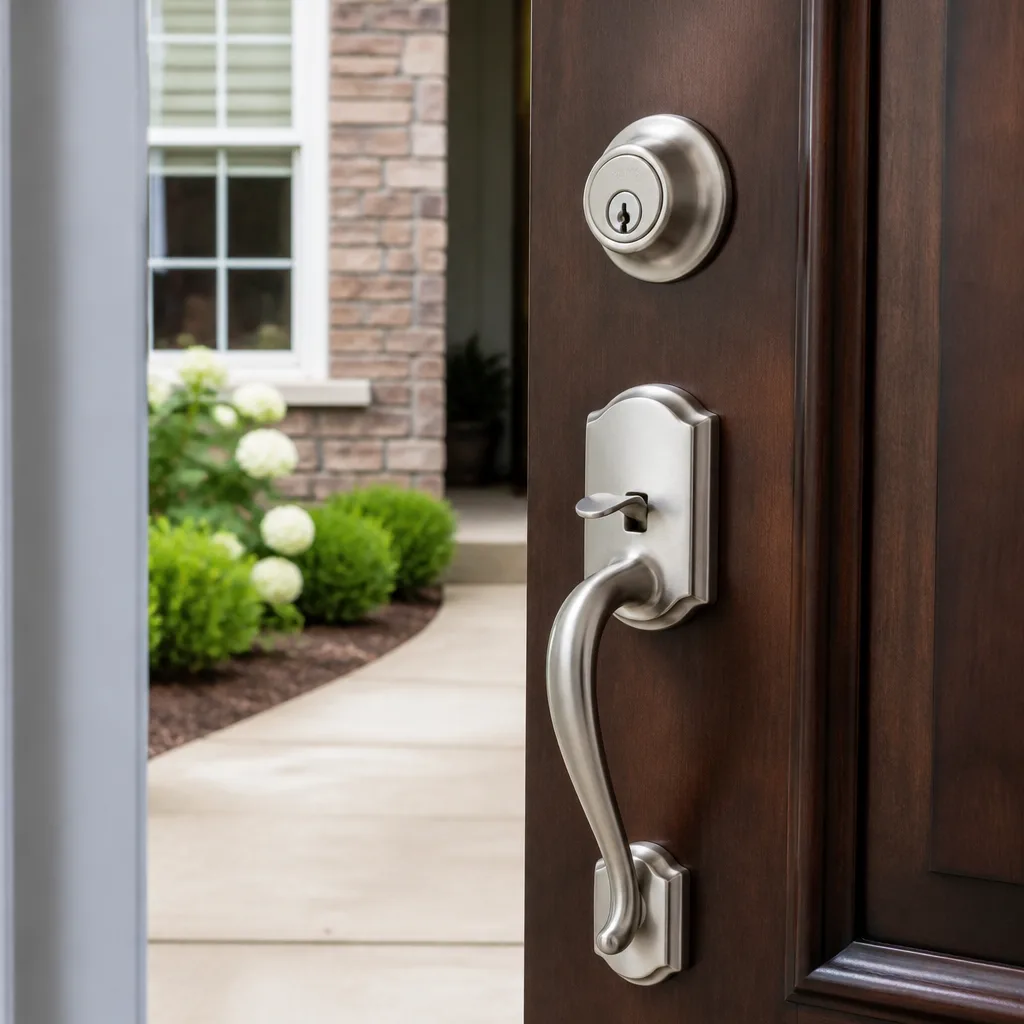 Schlage
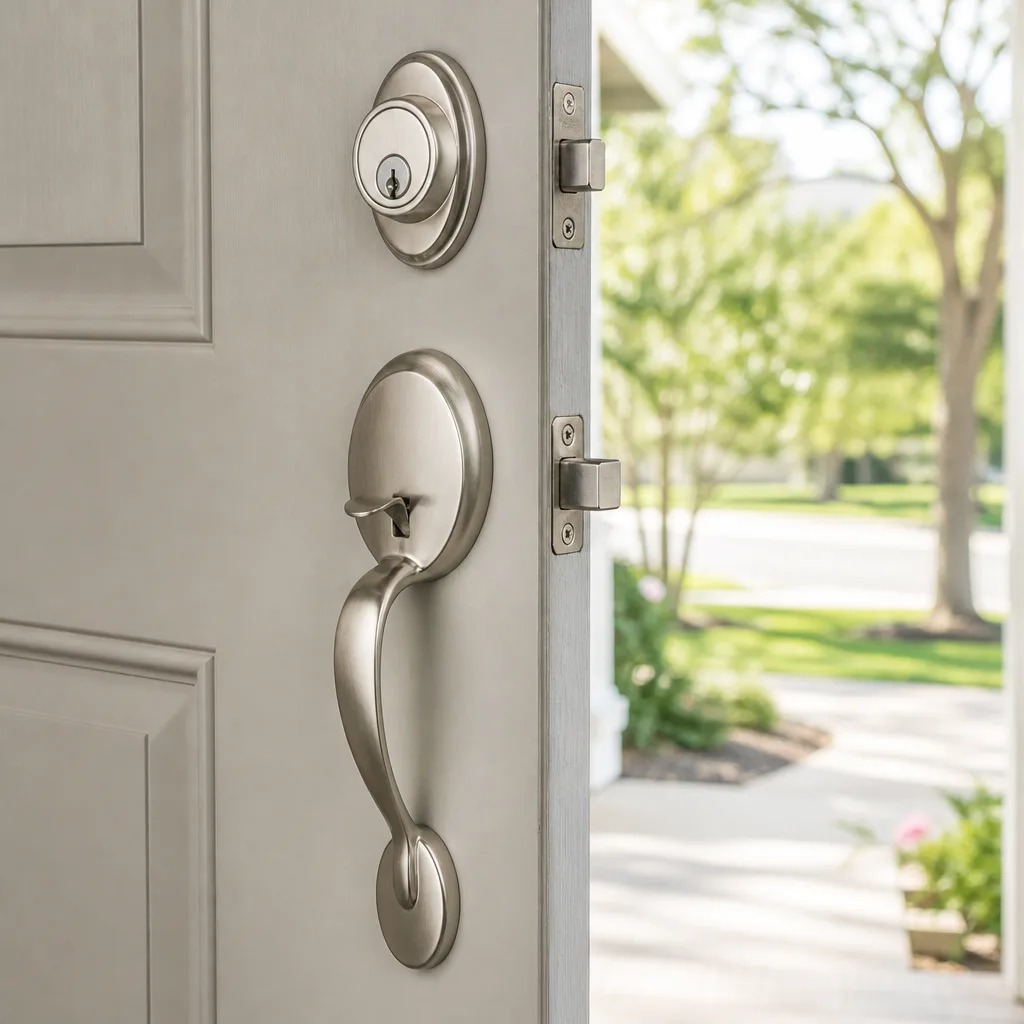
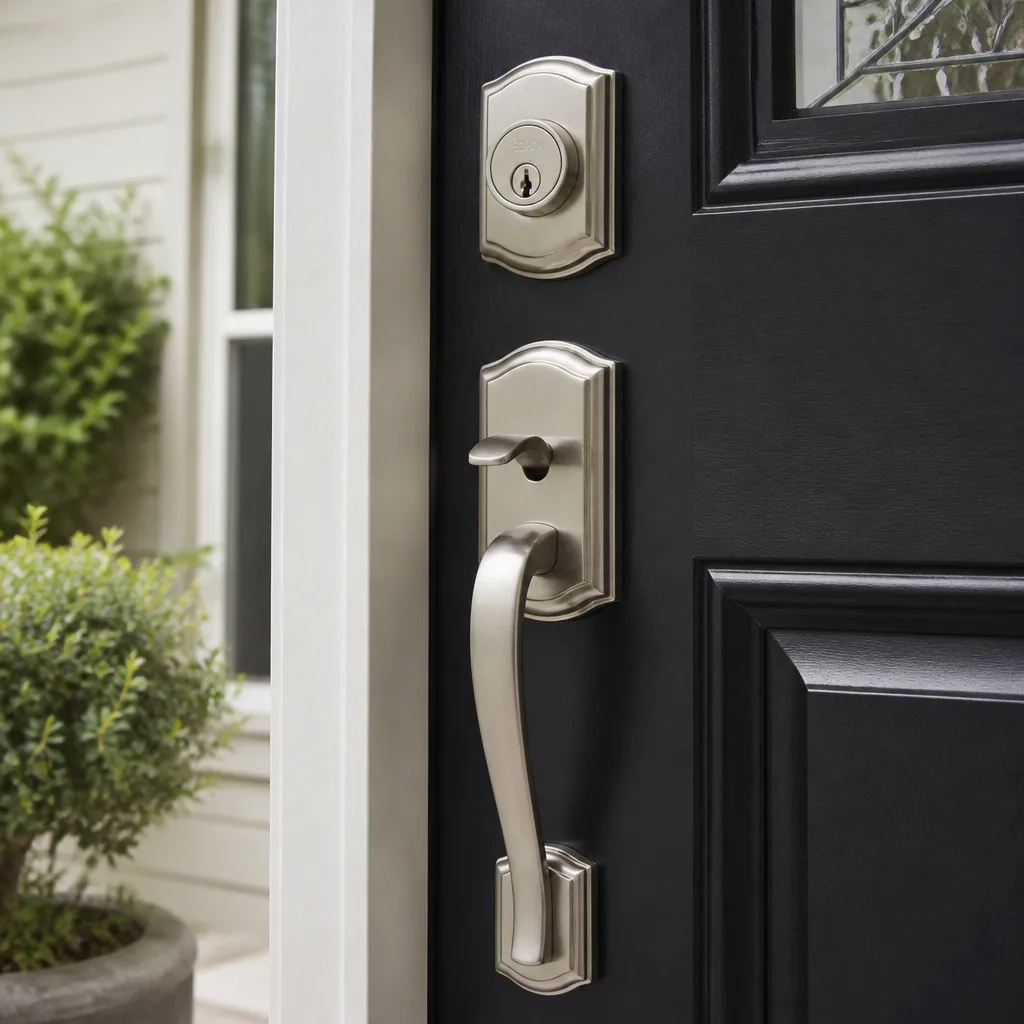 Kwikset
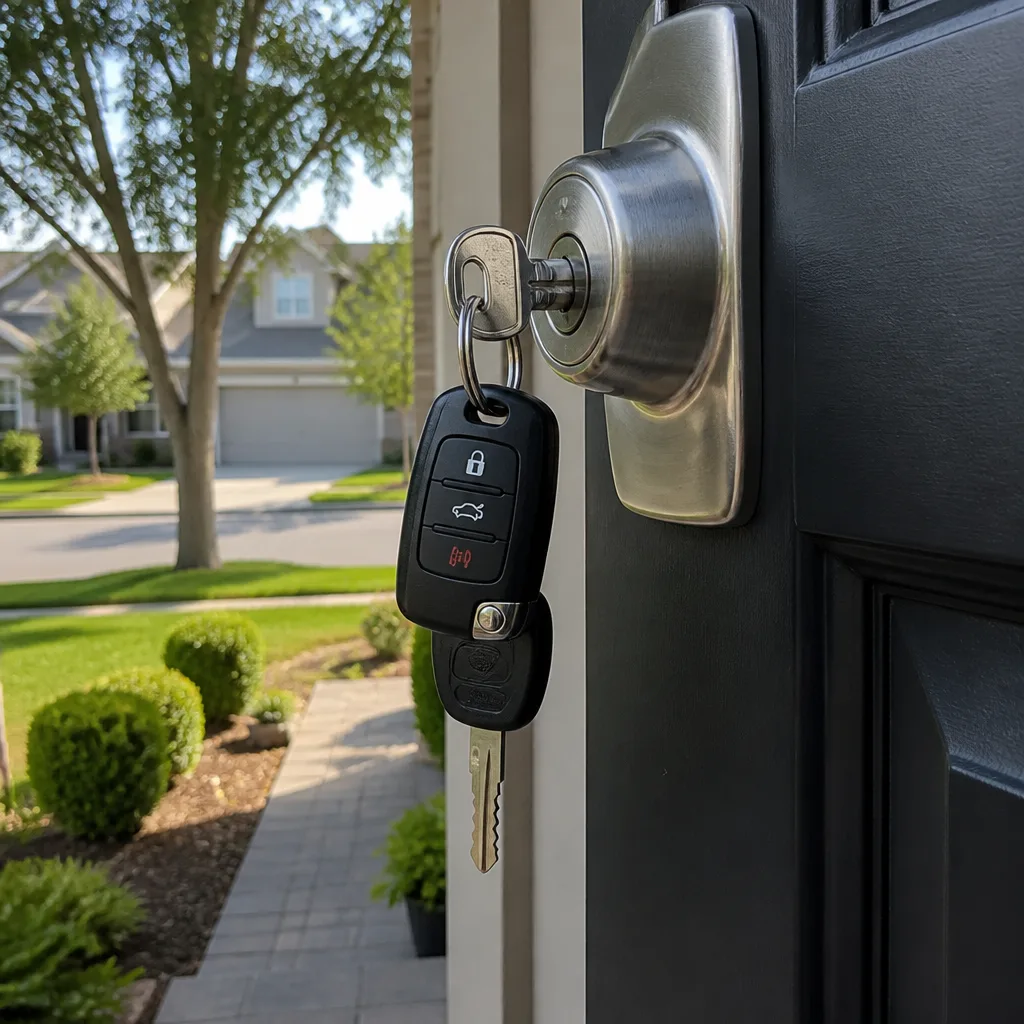 Car keys & fobs
Non-destructive entry first, always - and we re-key Schlage, Kwikset, and Baldwin locks on the spot while you watch
You get a price before we start. It does not change when we arrive. No surprises.
Get your free estimateHow to Hire a Locksmith Contractor in Mesa: A Step-by-Step Guide
Here’s a number that should make every Mesa homeowner pause: industry data has long suggested that a meaningful portion of the locksmith listings that dominate “locksmith near me” searches in major metro areas are lead-generation scams. The phone rings at a call center in another state, an unlicensed technician shows up in an unmarked vehicle, and a $49 quote becomes a $400 invoice. This guide walks through the exact vetting process that separates legitimate, technically competent locksmiths from operations that should never touch your door hardware, and you can find more guides & resources on our blog. You’ll learn how to verify credentials in Arizona, what to ask before anyone is dispatched, and which red flags are specific to the Mesa market.
Quick Answer
To hire a legitimate locksmith contractor in Mesa, verify their Arizona business license, ask for a full written estimate before dispatching, confirm they have a physical business address that matches their state records, and ask specific questions about the lock brands on your doors. A professional will give you clear, itemized answers and a flat price over the phone. Any resistance to these questions is reason enough to hang up.
Styles & brands we work with
Table of Contents
- Step 1: Verify Their Arizona Credentials Before Anyone Arrives
- Step 2: The Phone Questions That Separate Professionals From Scams
- Step 3: What a Legitimate Written Estimate Should Include
- Step 4: Why a Physical Business Address Matters More Than You Think
- Step 5: Mesa-Specific Red Flags You Should Know
- What Realistic Locksmith Pricing Looks Like in Mesa
- How to Choose a Locksmith That Won’t Oversell You
Step 1: Verify Their Arizona Credentials Before Anyone Arrives
Arizona does not require a statewide locksmith license, which surprises most people. What it does require is that any locksmith operating as a business carries the proper local business licenses for the cities where they work, along with applicable contractor licensing through the Arizona Registrar of Contractors if the scope crosses into physical alterations. This creates a verification gap that scammers exploit. A legitimate locksmith in Mesa should be able to provide a state tax ID, proof of local business registration, and insurance documentation without hesitation.
In our experience, a professional operation will volunteer this information before you ask. The questions to ask are simple and direct:
- What is your Arizona state tax ID number?
- What is the name under which your business is registered in Mesa?
- Are you insured, and can you email me a certificate before dispatch?
- What is your physical business address in Arizona?
- Are the technicians who will arrive at my door employees or subcontractors?
Any locksmith who hedges on these questions, particularly the insurance certificate, should not be allowed to touch your locks. A locksmith is fundamentally given access to the mechanisms that keep people out of your home. The person holding those tools should be vetted to the same standard you’d apply to anyone else you trust with physical security.
You can cross-reference the business name they give you against the Arizona Corporation Commission’s public database. If the name doesn’t appear, or the name on their invoice differs from the name on their registration, you are almost certainly dealing with a lead-generation middleman rather than a local locksmith.
Step 2: The Phone Questions That Separate Professionals From Scams
The phone call is where legitimate locksmiths distinguish themselves within the first 90 seconds. A professional will ask you about your specific hardware before quoting anything. A scam operation will quote a price without asking a single question about what’s actually on your door. This distinction matters because the price a scam locksmith quotes is almost never the price you’ll pay.
Here are the questions to ask, and what the answers should sound like:
- “What brands do you work on?” A legitimate Mesas locksmith should be able to name the specific manufacturers they service. If the answer is “all of them” or “any lock,” that’s a red flag. A locksmith who genuinely works across residential, commercial, and automotive lines should be able to specifically discuss Kwikset and Schlage without pausing.
- “Do you rekey locks, or do you only replace them?” A professional will explain both options and help you determine which one fits the situation. A scam operation will almost always push full replacement, because replacement means higher parts markup. A locksmith who actively offers rekeying is signaling they’re interested in solving your actual problem rather than maximizing the invoice.
- “What will you do before starting any work?” Legitimate locksmiths verify your identity and your right to access the property before picking a lock or disassembling hardware. That is a security feature, not an inconvenience. The answer should be some version of “we will need to confirm you are the homeowner or have proof of occupancy.” A technician who doesn’t care about this will open any door for anyone who pays, which tells you everything you need to know.
- “Who answers your phone after 10 PM?” In Mesa, summer storm season creates a predictable wave of lockouts and storm-damaged locks. Ask who picks up. If the answer is a call center, ask where that call center is located. If it’s not Arizona, you’re likely in a lead-gen pipeline.
Step 3: What a Legitimate Written Estimate Should Include
The verbal quote you get on the phone is not a binding estimate. In fact, the locksmith trade has a well-documented problem with bait pricing specifically because verbal quotes are so easy to abandon. A legitimate locksmith in Mesa will provide a written estimate, either by email before dispatch or on a service ticket at the door, before any work begins.
A legitimate written estimate should include the following line items, each with its own dollar amount:
- The dispatch or trip fee, if any, stated clearly as a flat dollar amount
- The per-lock labor charge for each lock serviced
- The specific hardware being installed or replaced, with brand name and model where applicable
- The rekeying charge per cylinder if rekeying is part of the job
- Any additional material costs, itemized rather than rounded into a lump sum
- The total amount, stated in words and figures, that will appear on the final invoice
- A statement that no additional charges will be applied without a sign-off
We’ll be direct about this: the full price quoted on the phone is the price on the invoice. That is the standard. If a locksmith cannot commit to a flat, all-in price before leaving their shop, you should not let them leave their shop for your house. Bait pricing in this trade is pervasive precisely because people under duress agree to things they’d never accept in a calm moment.
What a legitimate Mesa locksmith will not do is quote a service call at $19 and then “discover” that the lock is a “high-security” or “commercial-grade” unit requiring an additional $200 in labor. Real pricing is built on the work required and the parts involved, not on what the technician thinks you’ll pay once they’re standing on your porch.
Step 4: Why a Physical Business Address Matters More Than You Think
A locksmith’s physical business address is the single most reliable signal you have that the operation is real. Most locksmith scam operations in Mesa, and in every other major metro area, are run as virtual businesses. The phone number routes to a call center, the “local” address is a UPS box or a rented meeting room, and the technician who arrives is an independent contractor dispatched through a lead-purchase network.
Here is what to do with the address any locksmith gives you:
- Search the address online. If it’s a residential home, that’s not automatically disqualifying; many legitimate locksmith operations start as home businesses. But it should be a real Arizona address, not a commercial mail receiving agency or a “prestigious business address” rental.
- Search the address with the words “virtual office” or “mailbox.” If it comes back as a virtual office location, that’s your answer. The locksmith does not have a physical operation in Mesa.
- Cross-reference the address against state records. The Arizona Corporation Commission lists a statutory agent address for every registered business. If the address the locksmith gives you doesn’t match the address in the state database, ask why. A mismatch is not always fraudulent; businesses move. But a pattern of mismatches across multiple listings is meaningful.
- Ask if you can pick up your new keys at their shop. This is the simplest test in the book. A real locksmith operation has a location where key cutting, pinning, and hardware assembly happens. If the answer is “we don’t have a storefront,” you’re dealing with a mobile-only dispatcher, not a locksmith with an actual shop.
For Mesa homeowners specifically, there is a geographic pattern worth knowing: many of the lead-generation locksmith operations that serve Mesa phone numbers operate out of call centers in Phoenix, Las Vegas, or even out of state. When you call a number with a Mesa area code but hear a call center in the background, you’re likely talking to someone who has never actually cut a key in their life. A real Mesa locksmith can tell you what part of town they’re in, approximately how long it will take to reach your neighborhood, and what hardware is common in homes near you.
Step 5: Mesa-Specific Red Flags You Should Know
Mesa is home to a few locksmith scam patterns that are worth knowing before you make a call. None of these are exclusive to Mesa, but they appear frequently enough in this market that homeowners should recognize them.
The unlabeled van. A legitimate locksmith operation will dispatch vehicles that are marked in some form, even if it’s a subtle logo on the driver’s door. A technician who arrives in a personal vehicle with no markings and no uniform may be a subcontractor working through a lead aggregator. You have no way to identify this person or hold anyone accountable if something goes wrong.
The quote that inflates on arrival. You were quoted $65 on the phone. The technician arrives, looks at the lock, and announces it’s a “commercial-grade” or “high-security” cylinder that requires specialized labor. The price is now $280. This is the classic bait-and-switch, and it is still running in Mesa. A professional will give you a written estimate that holds.
The “I’ll need to drill” routine. A skilled locksmith can open most residential lockouts without drilling, using picks, bypass tools, or air wedges. Drilling destroys the lock and requires replacement, which is a much more expensive invoice. A technician who reaches for the drill within two minutes is either under-trained or deliberately padding the job. In Mesa’s summer heat, when people are locked out of air-conditioned homes, this happens more often than it should.
The out-of-area answer. Call a Mesa locksmith and ask how far they are from your neighborhood. If the answer is vague, or if the person on the phone doesn’t know what Dobson Ranch or Red Mountain are, you’re likely not talking to a Mesa operation at all. A local locksmith knows Mesa’s geography the way a local doctor knows local health systems.
What Realistic Locksmith Pricing Looks Like in Mesa
Understanding what legitimate pricing actually looks like in this market is part of the vetting process, and our Locksmith Cost Breakdown: The Mesa Homeowner’s Reference for 2026 covers this in detail. Not all expensive locksmiths are scams, and not all cheap locksmiths are legitimate, but there are ranges that should immediately set off alarms. Here is a general framework for the Mesa market, based on what we see as a local operator.
For a standard residential lockout, a legitimate Mesa locksmith will typically charge between $75 and $150 total, all in, depending on time of day and the type of lock involved. Emergency late-night calls will sit at the higher end. A rekeying job, which involves changing the internal pins in existing cylinders so old keys no longer work, typically runs $20 to $40 per cylinder in this market plus a service fee, making a full-house rekey with four or five cylinders a $250 to $350 job on average. Full lock replacement, where new hardware is installed, will depend heavily on the brand: a basic Kwikset or Schlage deadbolt installation may run $120 to $200 per door with hardware, while premium residential hardware from a brand like Baldwin will run two to three times that.
We’ve also seen situations in Mesa where high-end residential properties in neighborhoods like Las Sendas or Alta Mesa have specialty hardware that requires a locksmith with brand-specific training. A Medeco high-security cylinder, for example, is not something every mobile locksmith can cut or pin correctly. That is not a red flag in itself; it just means the locksmith needs to know the brand before they arrive.
Here is what that pricing structure looks like in a simple table:
- Residential lockout (standard): $75 – $150 total, depending on time of day
- Rekey, per cylinder: $20 – $40, plus service call
- Deadbolt replacement (Kwikset/Schlage): $120 – $200 per door with hardware
- Premium residential hardware (Baldwin, Yale): $250 – $600 per door depending on model
- High-security cylinder work (Medeco, Abloy): Premium pricing, brand-specific labor
- Car key replacement (standard transponder): $150 – $350 depending on make and model
These are honest ranges for the Mesa market. Any phone quote that falls dramatically below these, especially with a low service fee attached, should be treated as a likely bait price that will not hold. The old rule applies here as well as anywhere: if the price sounds too good to be true, the technician will find a way to make it up once they’re at your door.
How to Choose a Locksmith That Won’t Oversell You
The easiest way to spot a locksmith who is not going to oversell you is to call one and see whether they try to sell you anything at all. A legitimate locksmith’s first job is to solve the problem you actually have, not to upsell you into new hardware you don’t need. The simplest interactions reveal the most.
For example, when a customer calls us about a lost key, our first question is how many keys are outstanding and whether the existing hardware is in good shape. In a high percentage of cases, the right answer is a full rekey rather than a lock replacement. Rekeying a cylinder costs a fraction of what new hardware costs, and when the existing locks are quality units, replacing them is simply wasting money. A locksmith who pushes new hardware when rekeying would solve the problem is either under-trained or running up the invoice.
That same test applies to car key replacement. A professional locksmith with automotive key cutting and programming capability can often replace a modern transponder key or key fob for significantly less than a dealership charges, and without the multi-day lead time. If a locksmith tells you that “only the dealer can do this,” that’s a sign you’re talking to someone without the equipment to do the work, not an honest assessment of your options.
We work across the full spectrum of lock hardware because our customers in Mesa do too. On any given week, we might be rekeying a Schlage deadbolt in a Dobson Ranch condo in the morning, cutting a programmed transponder key in the afternoon, and then working on a commercial property’s Mul-T-Lock restricted key system before the day’s over. That range is not common among local locksmiths, and it shapes how we approach every job. We don’t pitch high-security hardware to someone who genuinely needs a single Kwikset rekey. We don’t pitch replacement to someone whose existing locks are better than what we’d put in. We’ve seen what happens when the wrong person works on a lock with premium tolerances, and it’s always more expensive to fix than it would have been to hire the right person in the first place.
If you’re comparing locksmiths in Mesa, ask them about the brands they actually service. Ask if they can rekey rather than replace. Ask what they’ll do if the lock you have is outside their experience. A professional will tell you the truth. A lead-generation call center will tell you whatever gets you to agree to a dispatch.
The core message of this guide is simple: the most important decision you make in a lockout or security upgrade is not which locksmith you call, but which locksmith you don’t. The questions above will help you make that call before anyone arrives at your door. When you’ve found a locksmith who answers all of them clearly, gives you a written estimate, and holds to it, keep the number. Parkway Lock & Key is one operation that meets those standards, and we’d rather earn your business with an honest answer than buy it with a low teaser price.
Common Mistakes to Avoid
- Calling the first number that appears in a search result. Paid ads at the top of search results are not a reflection of quality; they are paid placement. Scam operations routinely outspend legitimate locksmiths on advertising in the Mesa market because their margins are built on invoice inflation.
- Accepting a verbal quote without a written estimate. A verbal quote is a marketing statement. A written estimate is a business commitment. If a locksmith won’t write it down before starting work, you don’t have a price.
- Letting a technician start work before confirming the total. Once a lock is disassembled, you are in a weak negotiating position. Confirm the full price before the first tool comes out.
- Not asking about rekeying as an option. In many Mesa homes, the existing hardware is perfectly good and a rekey is all the security reset you need. If the locksmith never mentions it, ask them why.
- Assuming a local area code means a local business. Phone numbers are portable and easily spoofed. A 480 area code does not mean the person answering is in Mesa, or even in Arizona.
- Skipping the insurance question. A locksmith without liability insurance should not work on your home. The thing about insurance is that you only need it when something goes badly wrong, and by then the absence of it is catastrophic.
- Ignoring your instinct after the phone call. If a locksmith’s answers feel evasive or too smooth, trust that feeling. There are too many legitimate options in this market to settle for a conversation that makes you uneasy.
When to Call a Professional
Some lock situations are genuinely not DIY territory, and knowing where that line is protects both your security and your wallet. If you’ve lost all copies of a key and don’t know whether the lock has been compromised, a professional can rekey the existing hardware for a fraction of what full replacement costs. If you’re locked out of a vehicle with a transponder key, or your key fob has stopped programming, the dealer is rarely your only option. And if you’ve had a break-in attempt, or given keys to someone who should no longer have access, a full rekey is the security reset that makes sense. A professional can also assess whether your existing hardware is adequate for the actual security level your home needs, rather than simply swapping in whatever is on the shelf.
Emergency locksmith service exists for exactly the situations where you’re locked out at the worst possible time, and that’s precisely when vetting matters most. Parkway Lock & Key offers free estimates in Mesa. Call (877) 824-1139 and you’ll speak with someone who can tell you exactly what the job will cost before anyone is dispatched.
Frequently Asked Questions
Arizona does not issue a statewide locksmith license, so verification means checking that the business holds proper Mesa and state registrations, carries liability insurance, and can produce a matching physical address. Ask for their Arizona state tax ID and cross-reference the business name against the Arizona Corporation Commission’s public database before anyone is dispatched.
A legitimate residential lockout in Mesa typically costs $75 to $150 total, while a full rekey of a standard home runs $250 to $350 including the service call. Any quote dramatically below these ranges, especially one built around a low service fee, is a likely bait price.
At any legitimate locksmith operation, the full price quoted on the phone is the price on the invoice. If a locksmith adds charges on arrival without a written explanation and your agreement, they are running a bait-pricing model and you should refuse the work.
Rekeying is usually the smarter move when your existing hardware is in good condition and you just need old keys to stop working. A professional locksmith will tell you honestly which option fits your situation rather than defaulting to a full replacement.
Response times for legitimate Mesa locksmiths are typically measured in how long it takes to cross the city, not in a meaningless ninety-minute window from a call center. A real local operation can tell you approximately when a technician will arrive based on where you are and where they’re currently working.
Ask the locksmith directly whether they have hands-on experience with the specific brand before they arrive. Premium residential and high-security lines require brand-specific knowledge to service correctly, and a locksmith who says “any lock” without asking what’s on your door is not the right person for premium hardware.
The Bottom Line
Hiring a locksmith in Mesa is not complicated once you know what to ask. Verify the business registration, get a written estimate before work begins, confirm that the phone price is the invoice price, and ask the brand-specific questions that separate real technicians from dispatchers. The single most valuable thing you can do is call before you have an emergency so you can ask these questions calmly, as our Locksmith Emergency Preparedness Guide for Mesa Homes recommends. The second most valuable thing is to hang up on anyone who won’t answer them clearly. Locks are the thing that keeps your home safe; the person you hire to work on them should be held to that same standard.
Written by the team at Parkway Lock & Key, serving Mesa since 2014.